Truk Lagoon

OLYMPUS DIGITAL CAMERA

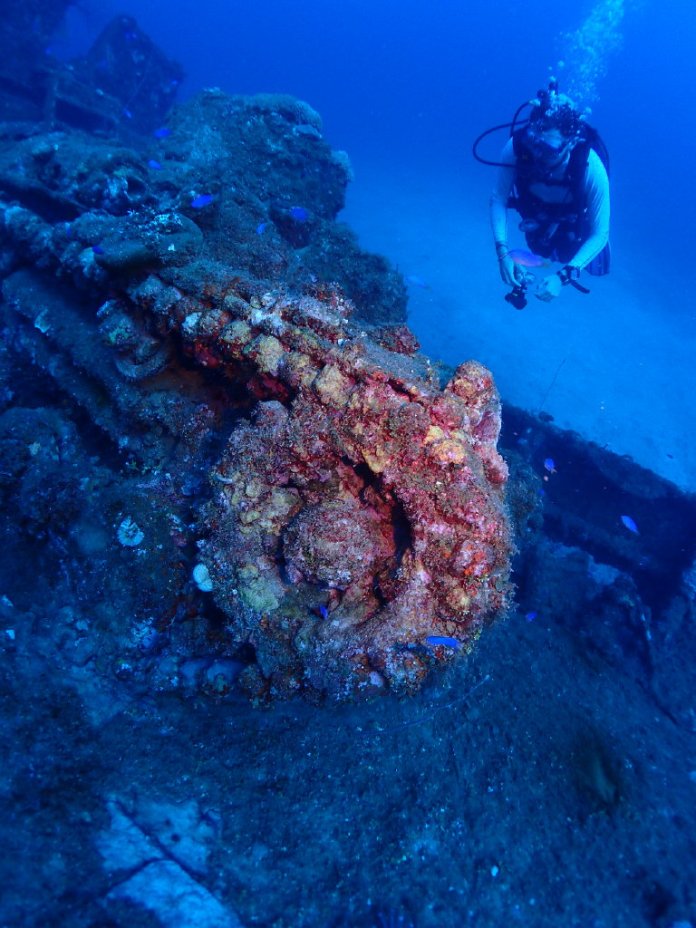
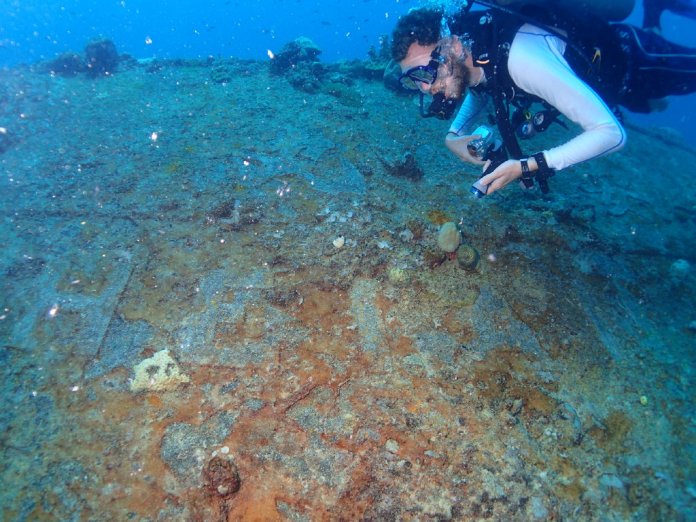
Tank on Nippo Maru

As I mentioned in my earlier blog “The Bicycle at War”, Truk Lagoon is no threat to cyclists but is a natural harbour in the Pacific about 800 miles north of Papua New Guinea and 2000 miles west of Hawaii.  It took over 30 hours to fly from London via Korea and the Guam.


Truk, now renamed Chuuk, Lagoon was initially a German colony before becoming Japanese after the First World War.  They built the harbour into a vibrant naval base with several airfields on the surrounding islands to provide protection for the many ships within its anchorage.


On the 17th and 18th February 1944 the American Navy managed to launch a massive aerial bombardment from a fleet of aircraft carriers that had sailed undetected to within 90 miles of the harbour.  50 ships were sunk, then and in later attacks, and sadly nearly 10,000 Japanese and local islanders lost their lives.  The ships were mainly merchant ships, with the designation Maru, that had been commandeered for the war effort.  Many had guns, planes, munitions, tanks on their decks and in their holds.


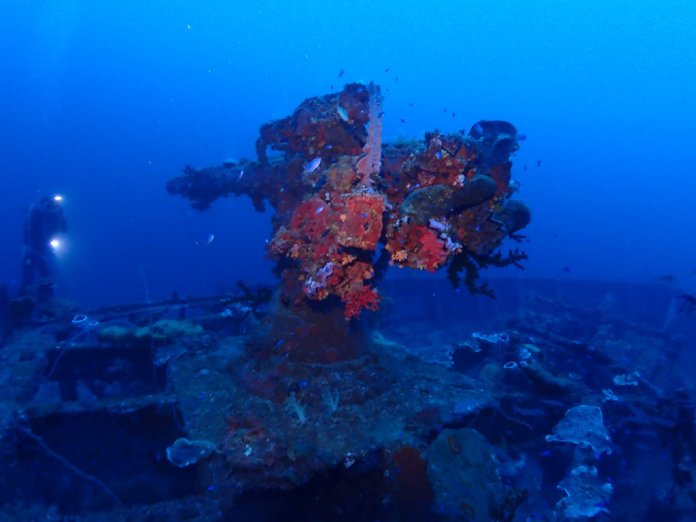
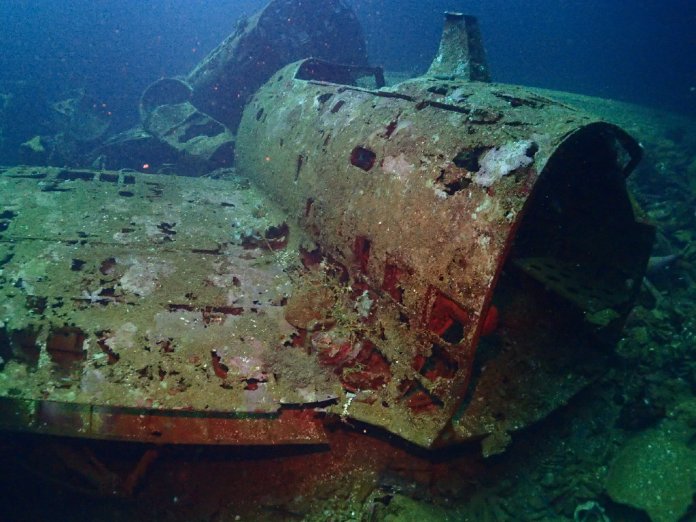
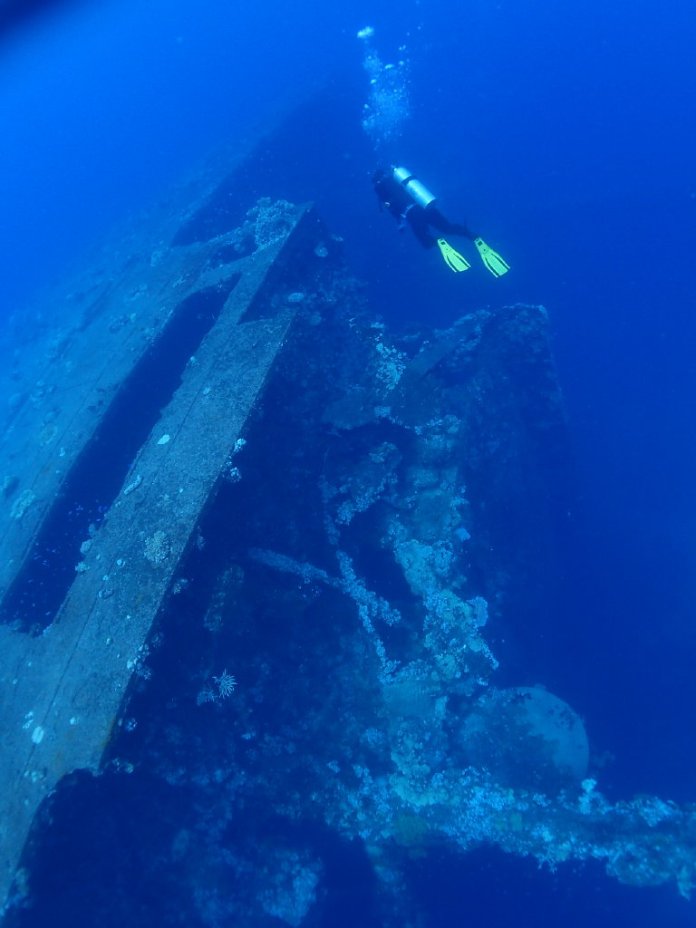
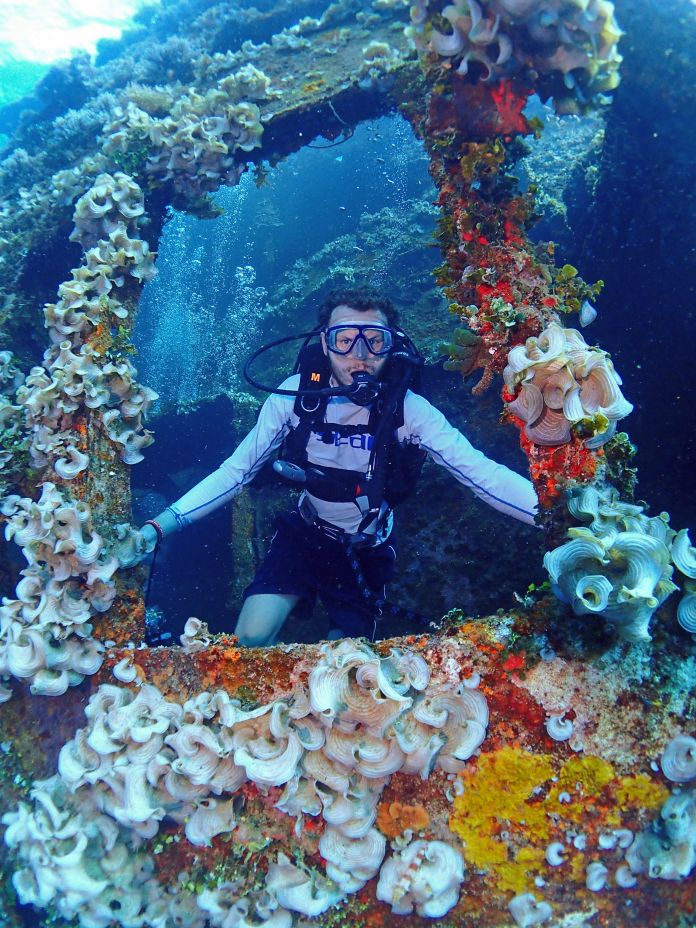
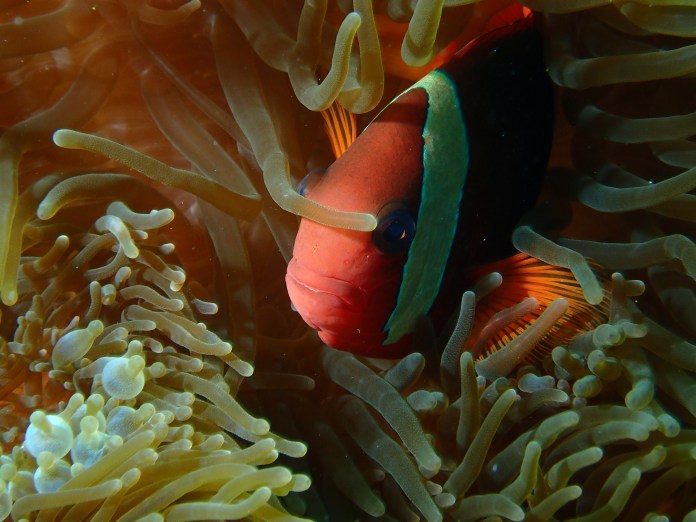
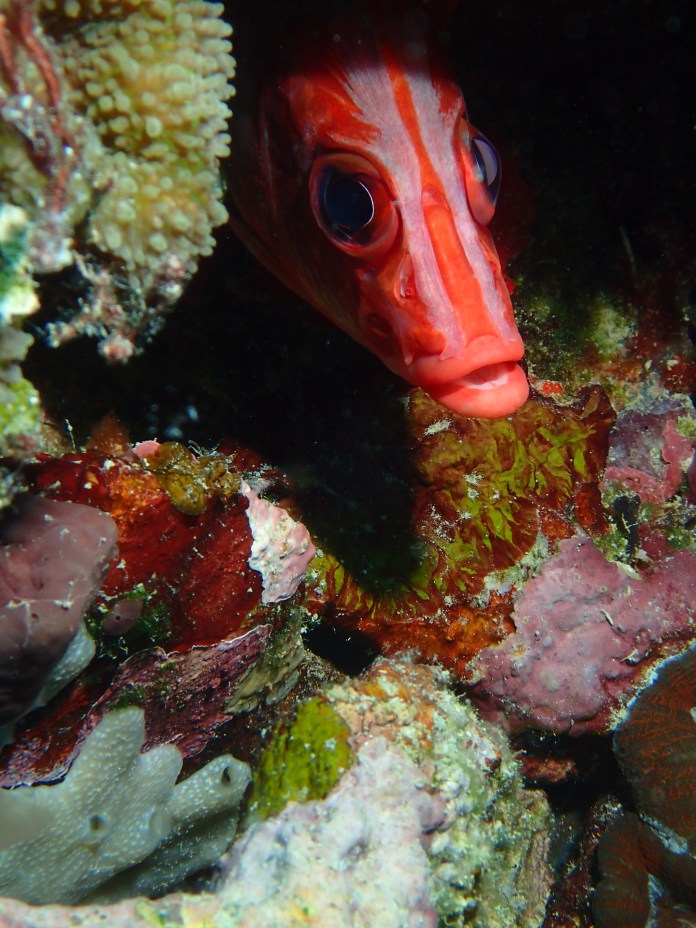
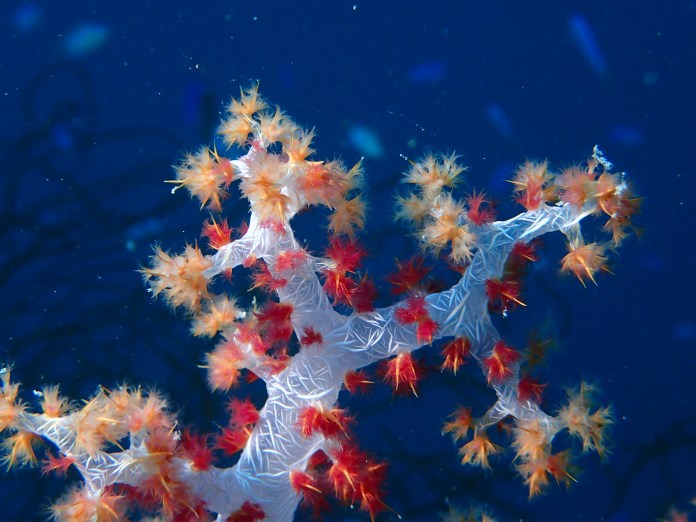
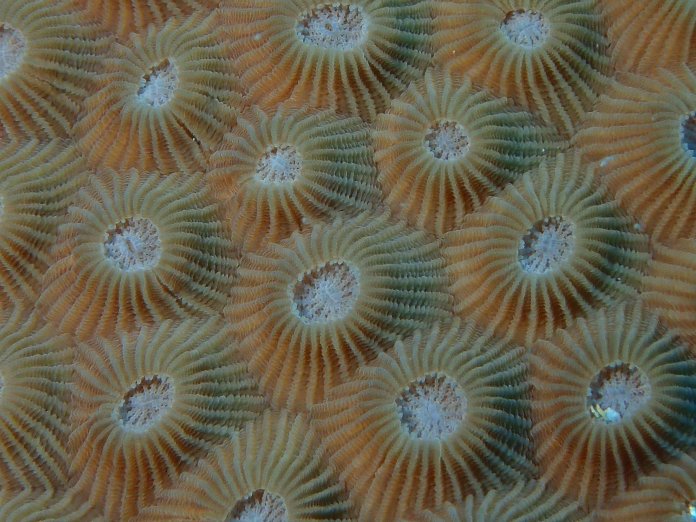
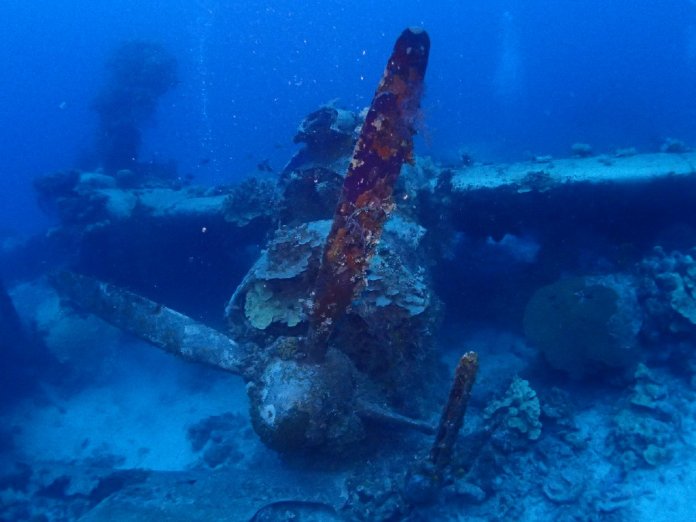
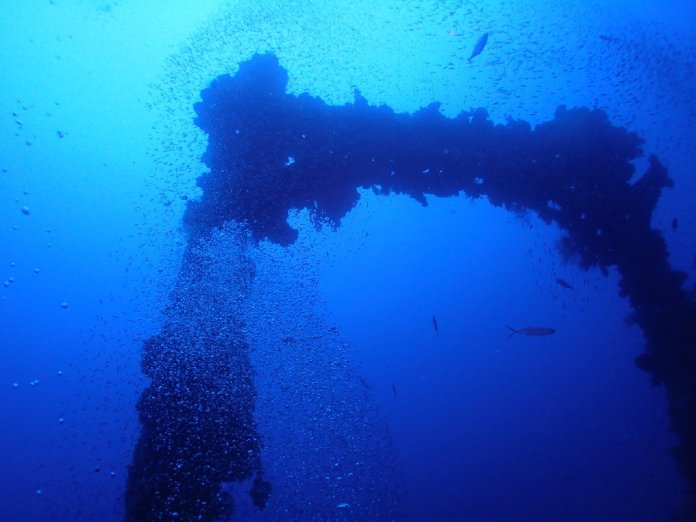
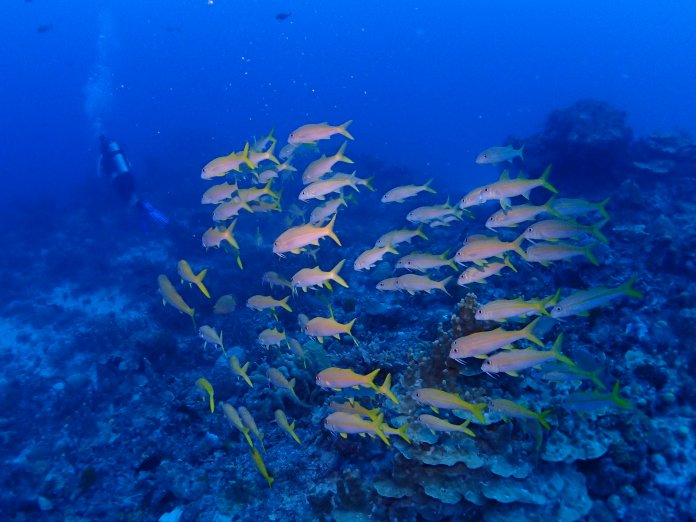
Following several requests, I have attached some more pictures that I took underwater. Not just featuring the wrecks but the corals, sponges, seaweeds and some of the many creatures that have started colonising them.   In general, the superstructures have become overgrown while the hulls seem to have less growth, possibly because of the antifouling treatment that they had.  Some ships are leaking fuel from their storage tanks but this seems to have dispersed by the ocean currents and probably, like the Gulf of Mexico, the bacteria in the warm water (29°C).


My son James and I stayed on SS Thorfinn and managed four dives a day for seven days, the deepest dives like the Aikoku, Amagisan and San Francisco were to a depth of over 50 meters.  I can recommend anyone who has taken up diving to leave the bicycle at home and venture to one of the best wreck diving locations in the world.


OLYMPUS DIGITAL CAMERA

San Francisco Maru

OLYMPUS DIGITAL CAMERA

Zero Fighter in Fujikawa Maru

OLYMPUS DIGITAL CAMERA

Rio de Janeiro Maru

OLYMPUS DIGITAL CAMERA

Heian Maru

Gosei Maru

Gosei Maru

OLYMPUS DIGITAL CAMERAOLYMPUS DIGITAL CAMERAOLYMPUS DIGITAL CAMERAOLYMPUS DIGITAL CAMERA

OLYMPUS DIGITAL CAMERA

Emily Flying Boat

OLYMPUS DIGITAL CAMERA

Aikoku Maru

Betty Bomber

Betty Bomber


Standard

The Bicycle at War

Kyosumi Maru

Kyosumi Maru

During my diving holiday of a lifetime in Truk Lagoon I found a rusty bike in a Japanese WW2 shipwreck which prompted me to consider the question, how have bicycles been used in war?
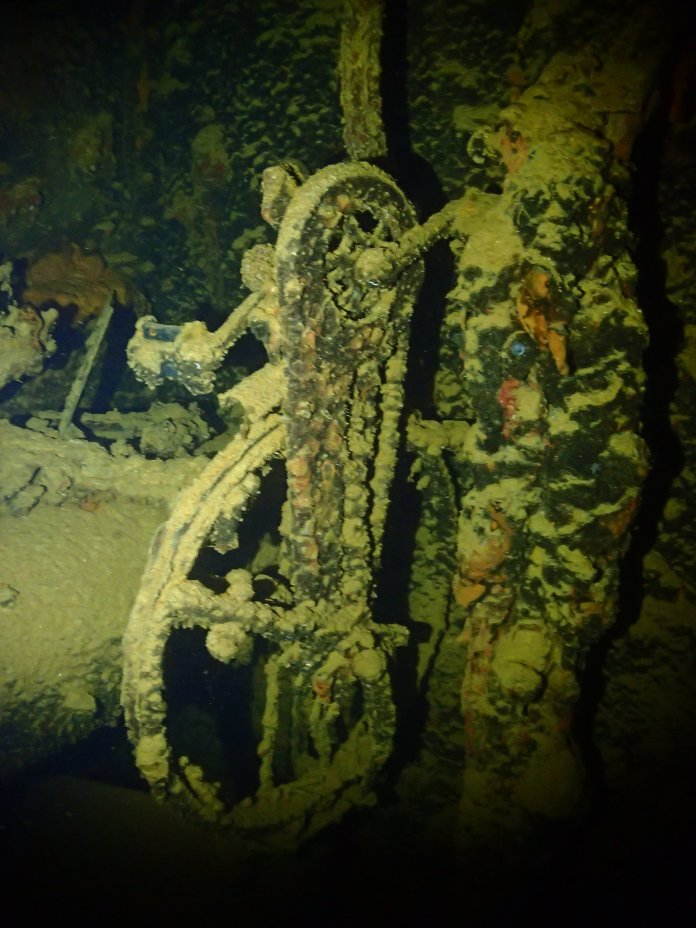
I was diving in the Pacific Ocean in the natural harbour and former Japanese naval base know as Truk or Chuuk Lagoon, part of the Federal States of Micronesia.  The American navy attacked it in February 1944 with hundreds of planes launched from aircraft carriers and sank about fifty, mainly merchant ship. There are a few bicycles on these wrecks including this one on the Kiyosumi Maru.
As I looked to answer my question, I came across a fascinating and enjoyable book by Jim Fitzpatrick called the Bicycle in Wartime: An illustrated History.
Soon after the bicycle was invented, some hoped that it would play a key role in replacing the horse.  It was quickly realised that the bicycle was not a straight swap for the horse, so bicycle charges with lances were abandoned for the more sensible opportunity of making troops more mobile.  Fitzpatrick describes incredible training feats by European and American soldiers covering enormous distances with bikes laden with equipment.  The reality is that, despite many miles cycled and strange bicycle contraptions created, the tank has replaced the horse and the bicycle has taken on a supporting role.
The bicycle first featured in the Boer War helping couriers and messengers.  There were some combat units using bicycles in the First World War but again its usefulness was to aid couriers.
In the Second World War, the bicycle took on a combat role helping the German troops keep up with the tanks on their Blitzkrieg across Europe and Russia, the French Resistance to get around more freely and parachute troops, with folding  bikes, to get to their objectives. Overall, the impact of the bicycle was useful but nowhere significant.
There have however been two times that the bicycle played a key role.
In December 1941, the Japanese invading army swept through the Malayan peninsular overwhelming British forces to capture Singapore.  Through careful reconnaissance before the war,  the Japanese commander Colonel Masanobu Tsuji realised that there was a perfect opportunity for war on a bicycle. There was a network of good roads and jungle paths built by the British to service the rubber plantations but the key was an abundance of local bicycles that were commandeered (stolen) by the Japanese infantry. This Blitzkrieg on bicycles was well planned and executed.
Tsuji’s tactic was to have mobile infantry units on bicycles supported by tanks and backed up by trucks carrying supplies.  Each division had about 6,000 troops on bicycles.  Each cyclist carried upwards of 65 pounds on his bike as well as a rifle or machine gun.  They traveled in units of 40 to 50 soldiers riding four abreast.  Whenever they met resistance they dismounted and fought on foot.  If a bridge was blown up, a makeshift one was put in its place and the bicycles wheeled over.  They pressed on relentlessly.
Up to 50,000 troops on bicycles covered 600 miles in seventy days a month quicker than Tsuji had planned.  This remains the only example where bicycles were the main mode of transport for the whole army.
As the military historian John Keegan described, “the principal reasons for the defeat, in virtually every assessment, were the Japanese soldiers’s speed, tenacity and mobility. Although outnumbered two to one, they grabbed local trucks, cars, and bicycles as they went, and used fishing boats along the coast as well, both to push forward, and to skirt around to the sides and rear of retreating British and allied forces. When considered collectively, most comments upon the nature and rapidity of the advance point to the bicycle as the crucial transport element. It enabled the Japanese infantry to keep up an unrelenting pace not possible on foot. Numerous on-the-spot accounts noted that the cyclists were routinely well ahead of their tank and motorized support. In contrast to the European proving ground, the Malayan blitzkrieg was spearheaded by bicycles, followed by tanks.”
And Colonel Masanobu Tsuji said more succinctly in Singapore: The Japanese Story
“Even the long-legged Englishmen could not escape our troops on bicycles”
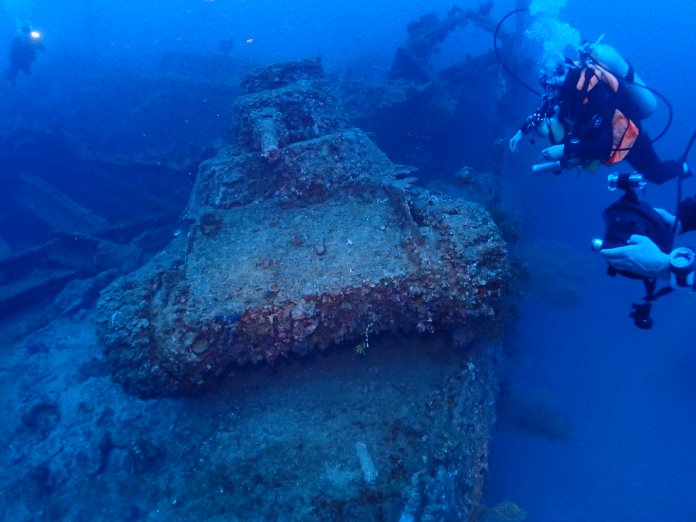
San Francisco Maru

Japanese Light Tank on San Francisco Maru

The Vietnam War was also won by the bicycle, not by troops on bikes but by civilians using them to carry supplies.  The key figure militarily was Vo Nguyen Giap. He developed  the technique of many small scale actions, no single one being important, but cumulatively raising the enemy’s anxiety level and destroying his self confidence. Giap proved a genius at logistics, able to “move men and supplies around a battlefield far faster than anyone had any right to expect,” and learned how to work with villagers without being betrayed by them. In a prolonged struggle during which it was not always certain who was on who’s side, that was no small talent.
Bicycles played a key role in this logistics effort.  They were strengthened and then loaded up with as much as 200 kilos of supplies.  Often the saddle was taken off and replaced with a stick in the seat post to help pushing and steering was accomplished with another stick lashed to the handle bars.  These two wheeled “pack-horses” were pushed through the jungle by local villagers.
In the First Indochina War against the French, they lost nearly 100,000 troops, with another 200,000 bogged down, in a nine year war.  As the war due to a close, they decided to take a stand in Dien Bien Phu a purpose built fortress in the jungle blocking a key supply route for the Vietnamese.
Unknown to the French, a massive well equipped Vietnamese army was assembled over over months and surrounded them undetected.  When the battle started, the French could not believe how much heavy weaponry, equipment and materials had been moved stealthily into place, mainly on bicycles, and quickly surrendered.
The Journalist Bernard Fall toured much of Vietnam on a bicycle during the war  He attempted to calculate the tonnage moved by  the Vietnamese logistics system. He did not include  figures for supplies of local Vietnamese origin, but concluded that from China alone, some 8,300 tons were shipped to Dien Bien Phu, including petroleum products, ammunition, spare weapons, and rice. The immense amount of material that was moved by human energy was simply not anticipated by the French. The overall supply system was aptly characterized as a “human serpent” that came up from the plains and wrapped its coils around the French garrison.
In the Second Indochina War, the Americans knew better than to ask the French for advice.  They had technology, helicopters, tanks etc but they underestimated the challenges of logistics and the power of thousands of civilians moving supplies on bicycles.  One of these supply routes was the Ho Chi Minh Trail.  It became the most critical and famous transport link of the war. It was a network of paths, roads, streams, and rivers running down the spine of the Annamite mountain chain of eastern Laos, through some of the most inhospitable terrain.  In some places it was impossible even to push bicycles.  Over the years the road was improved motorbikes began to replace bicycles from about 1970 and, in some places the road was widened so that trucks could be used.  It is remarkable that the Americans failed to close this trail that it is estimated one million people traveled along during the war.
The bicycle has probably had its time on the Battle Field.  The chapter closed when the last bicycle troops in Switzerland and their units were disbanded in the early 2000s.  A recent news report suggested that the Swiss want to re-introduce bicycles to improve the fitness of their troops.
The bicycle will still have its place in war, however, as a way for troops and sailors to get around their bases, airfields or ports.  I am sure that the bicycle I found on the Kiyosumi was used in this way.  So in warfare that is increasingly dominated by drones and machines, the bicycle may not be on the front line but drone pilots may still use them to get to their cockpits and mechanics on the airfields that launch the drones.
There was a lot more to see than bicycles in Truk Lagoon….
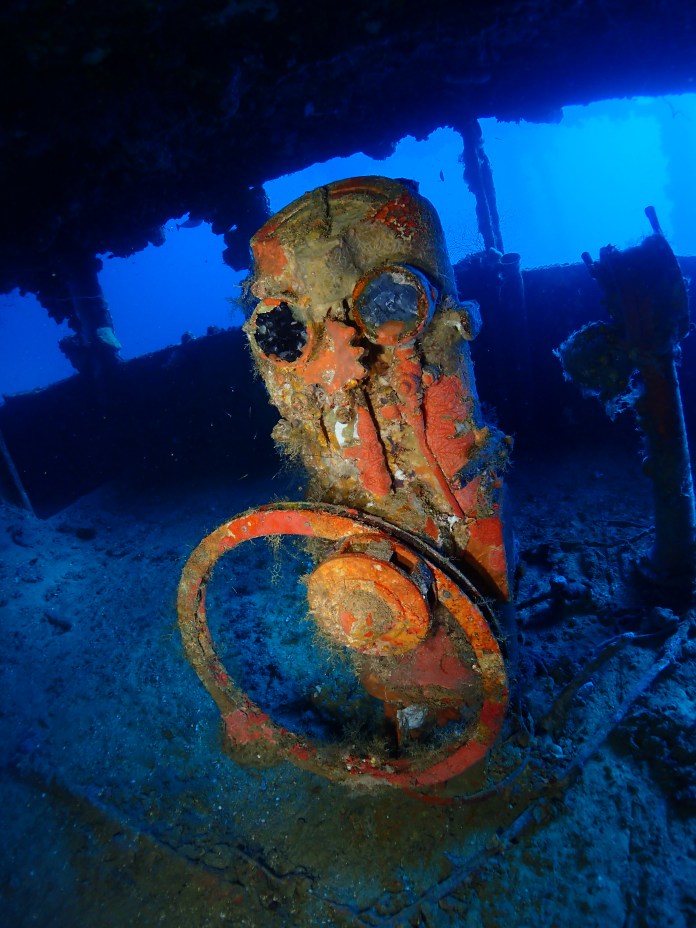
Nippo Maru

The Bridge of the Nippo Maru

Betty Bomber

Twin engined Japanese Bomb known as “Betty” Bomber

Standard

Box Hill

DSC01882  DSC01875

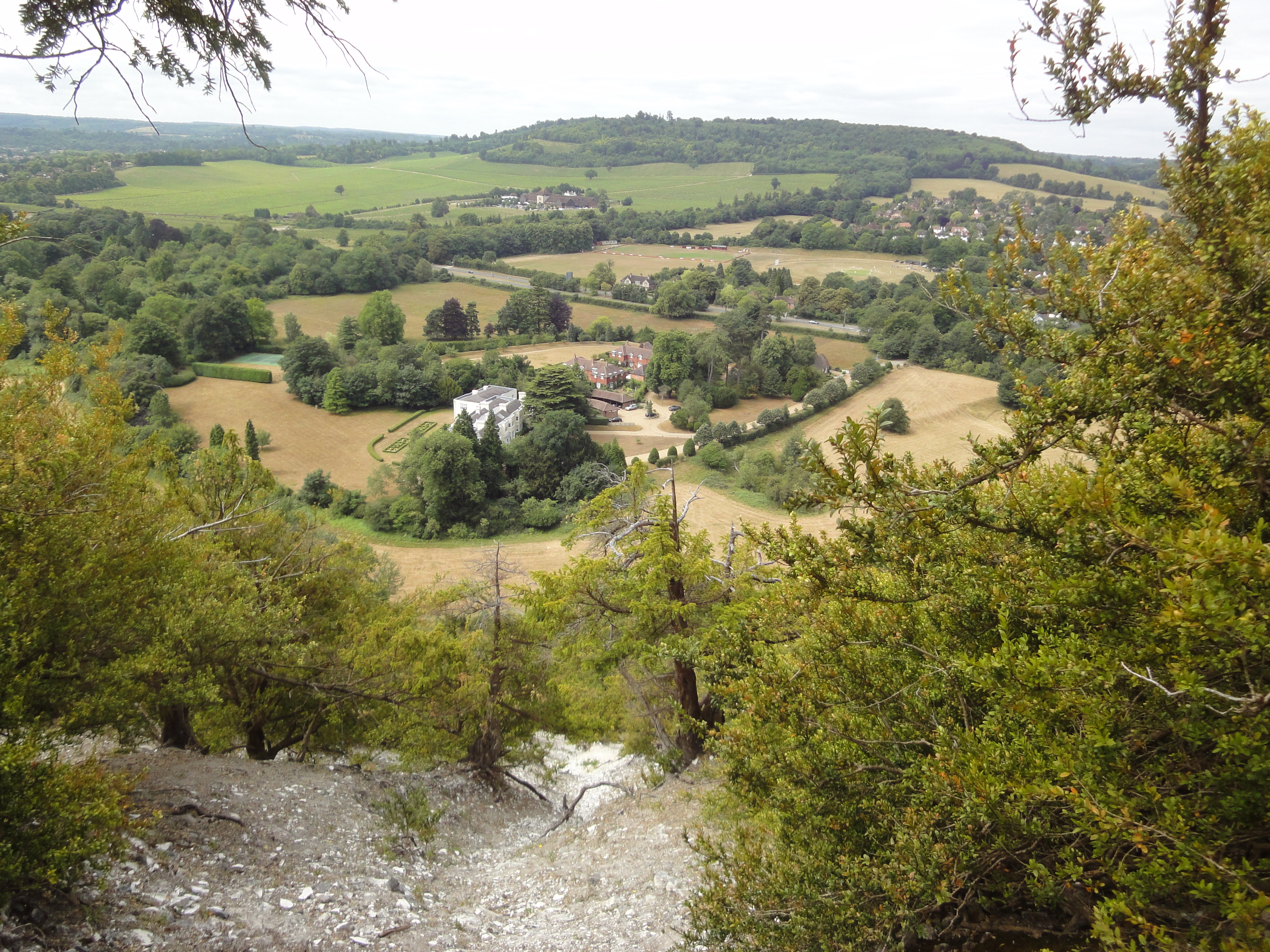
Views from Box Hill

Have you ever wondered what is the origin of the name of Box Hill the iconic centrepiece of the Olympic Road Race and next month’s Prudential Ride?

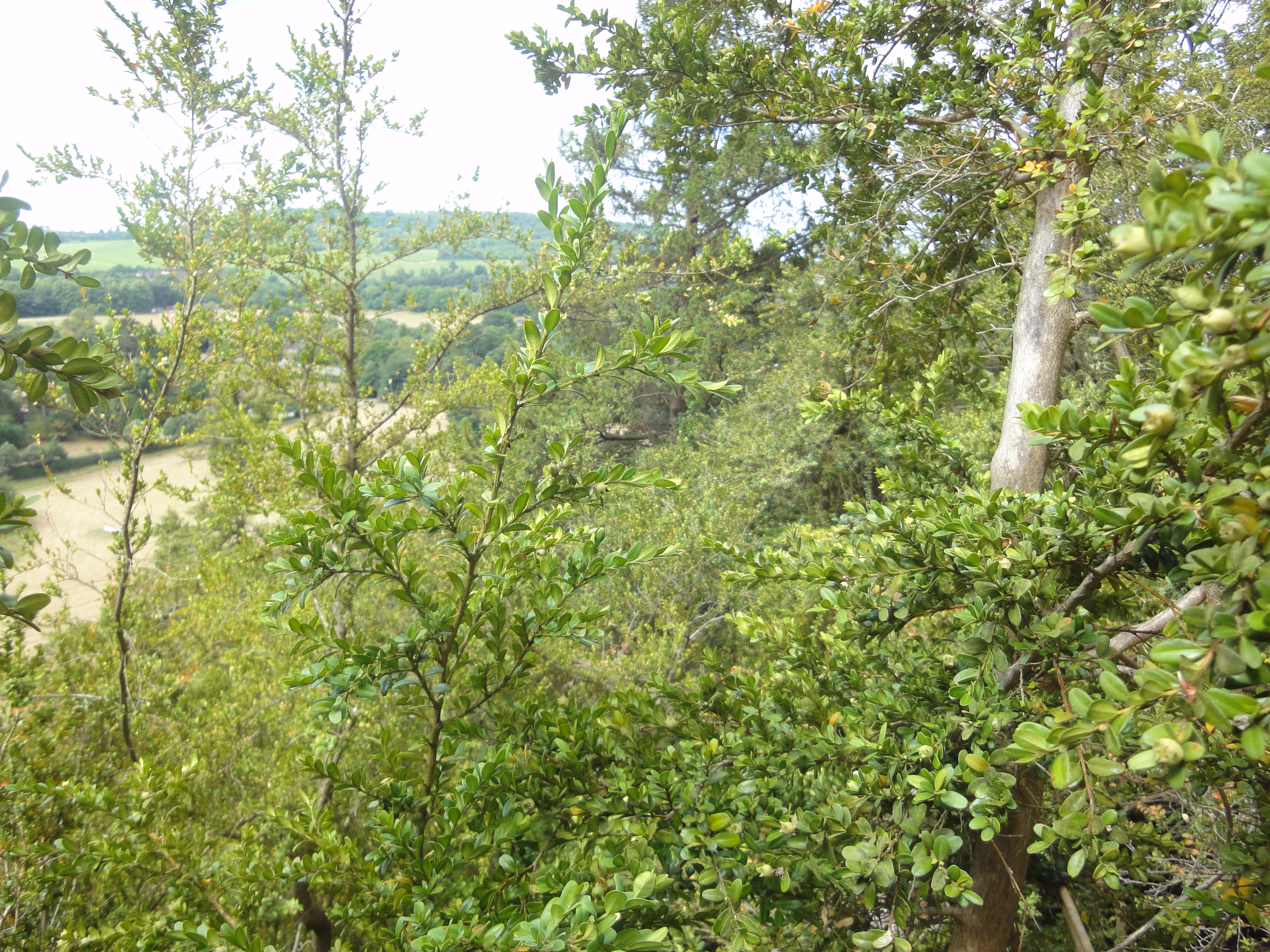
Box Hill is one of the last vestiges of Box woodland in the UK.  The Box tree,  Buxus Sempervirens, is the same species as Box hedges in gardens.  It is ideal for topiary, with small oval leaves, slow growth, resilience to drought and, as it’s name suggests, it is evergreen.
Box trees are not large, up to 10-15 metres tall.  They thrive in the chalky alkaline soil on the top of Box Hill. Their wide shallow root system enables them to cling to the steep slopes of the North Downs and the Chilterns, where another area of Box woodland extends through the Prime Minister’s estate at Chequers. There are probably little more than 20 hectares left in this country.
DSC01856
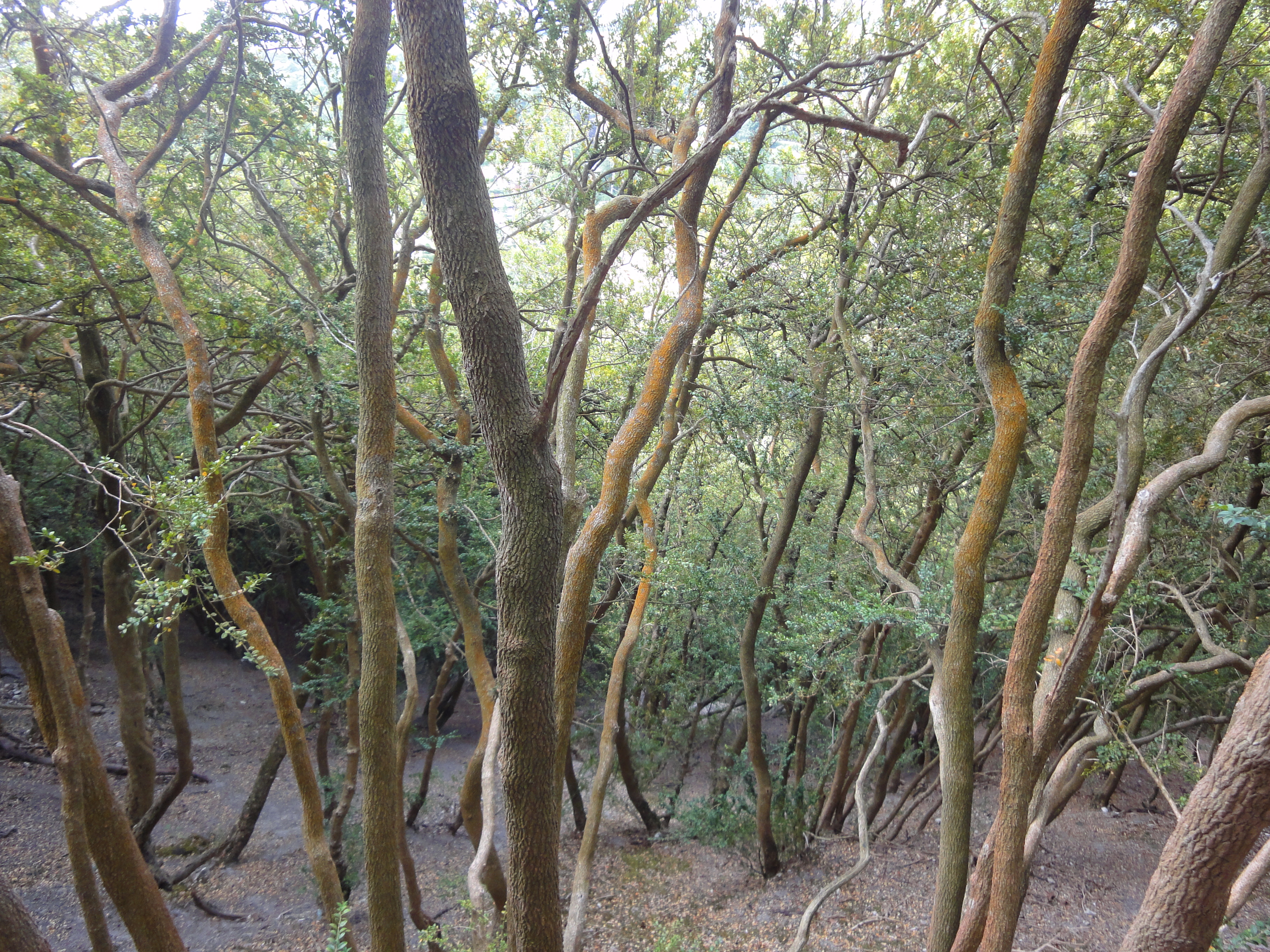
Under the canopy Box trees are bare.  Their trunks are like spindles and even after 200 years growing they are little more than 20 centimetres in diameter. But this is enough to cut down for timber.  Box is the only true hardwood grown in Northern Europe.  This light coloured wood has been used to make small wooden objects that need to be hard,  tough and good looking such as chess pieces, tool handles and wheels for the rigging of wooden sailing ships.
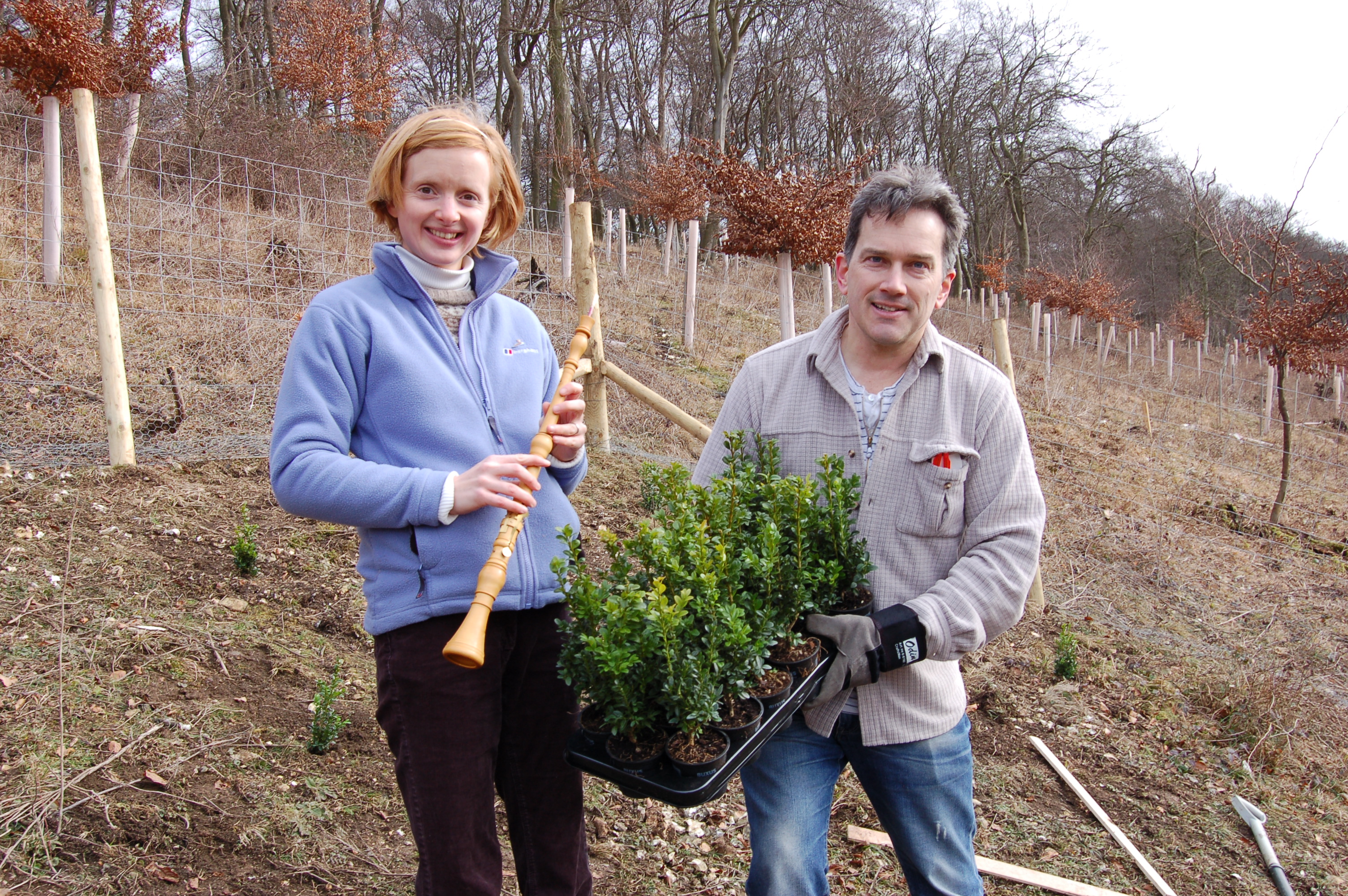
My interest in encouraging the replanting of Boxwood is its use in woodwind instruments such as recorders, oboes and clarinets. They have a sharp crisp tone beloved now by modern recorder players. Boxwood is perfect also for baroque clarinets but modern instruments, with many more keys than their earlier brethren, need to be made of the even tougher imported African Blackwood.
DSC_0211
From Box seedling to oboe in two hundred years
The North and South Downs were much more heavily wooded 3000 years ago and then ware cleared during the Iron Age to make way for farming. Many conservationists are trying to protect this Iron Age landscape, partly because it has enabled certain rare species of orchids to survive.  But wild Boxwood forest is also endangered and should be encouraged, particularly with the appearance of Box Blight a fungal disease that risks devastating the little Box woodland that we still have.
So next time you cycle up Box Hill, spare a thought that you are cycling in the last of an ancient woodland that has stretched over the surrounding hills of London for many Millennia.
IMG_0682
Some newly planted Boxwood

My thanks to Huw Crompton who has the same passion for Boxwood and provided some of the photos

Standard

Taming nature

By Lake Garda

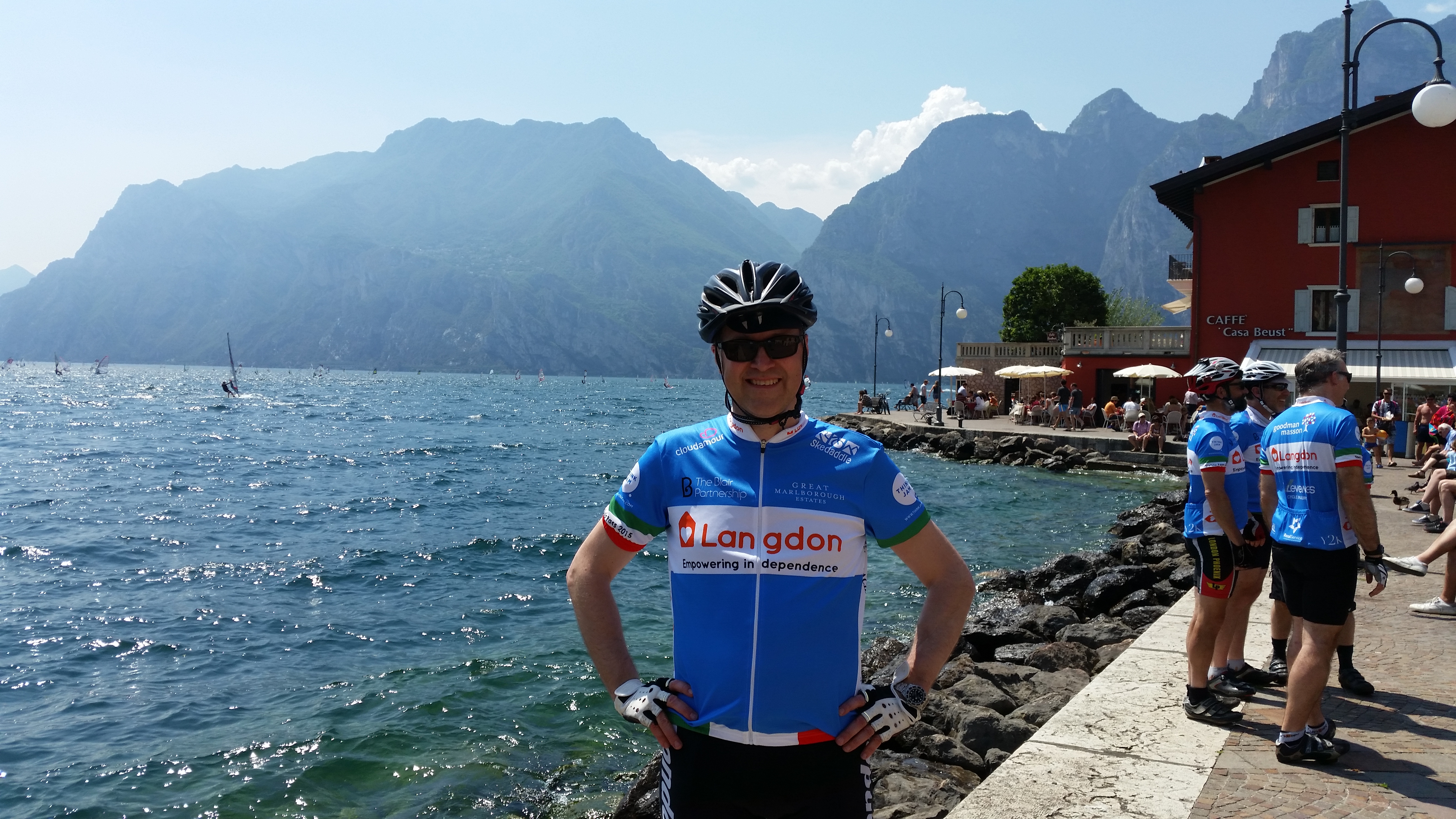
On my recent cycling holiday we peddled from Lake Garda to the Stelvio Pass.  We had some pleasant days passing lakes and rivers, through gorges and up a few steep climbs.  Overall we were gradually gaining height towards the Dolomites.
P1000783

As we get closer there is another interesting change, we move from the free and easy Italian speaking region to the German speaking part.  The landscape changes and gets more bottled up. I leave Jerome K. Jerome to describe the problem in his wonderfully observant book Three Men on the Bummel.  P1000813A story of the same three friends who went on a boating trip undertaking a cycling holiday in Germany.

“Your German is not averse even to wild scenery, provided it be not too wild. But if he consider it too savage, he sets to work to tame it. I remember , in the neighbourhood of Dresden, discovering a picturesque and narrow valley leading down towards the Elbe. The winding roadway ran beside a mountain torrent, which for a mile or so fretted and foamed over rocks and boulders between wood covered banks. I followed it enchanted until, turning a corner, I suddenly came across a gang of eighty or a hundred workmen. They were busy tidying up that valley, and making that stream respectable. All the stones that were impeding the course of the water they were carefully picking out and carting away. The bank on either side they were bricking up and cementing. The overhanging trees and bushes, the tangled vines and creepers they were rooting up and trimming down. A little further I came upon the finished work— the mountain valley as it ought to be, according to German ideas. The water , now a broad, sluggish stream, flowed over a level, gravelly bed, between two walls crowned with stone coping. At every hundred yards it gently descended down three shallow wooden platforms. For a space on either side the ground had been cleared, and at regular intervals young poplars planted. Each sapling was protected by a shield of wickerwork and bossed by an iron rod . In the course of a couple of years it is the hope of the local council to have “finished” that valley throughout its entire length, and made it fit for a tidy-minded lover of German nature to walk in. There will be a seat every fifty yards, a police notice every hundred, and a restaurant every half-time.”
P1000820

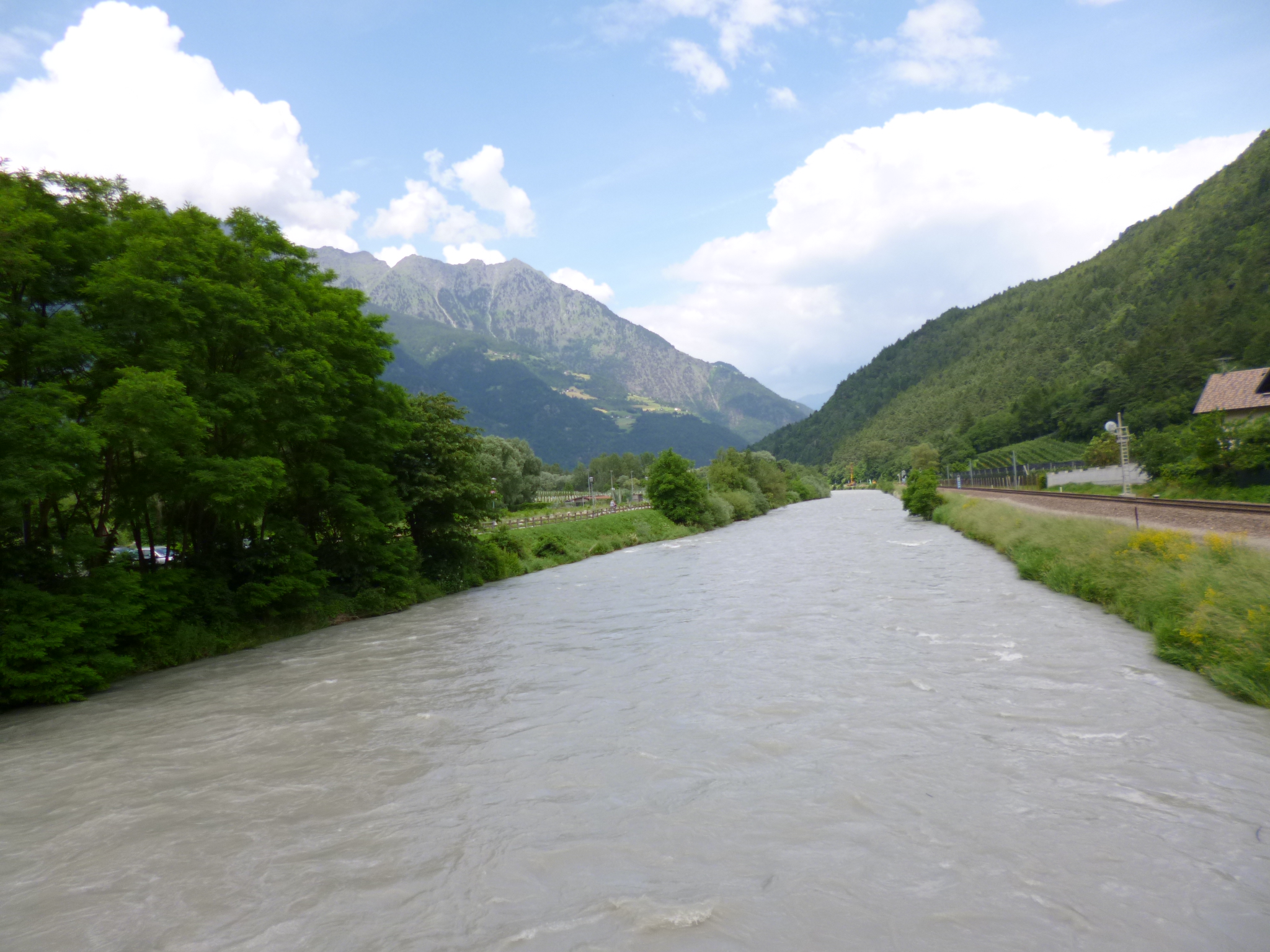
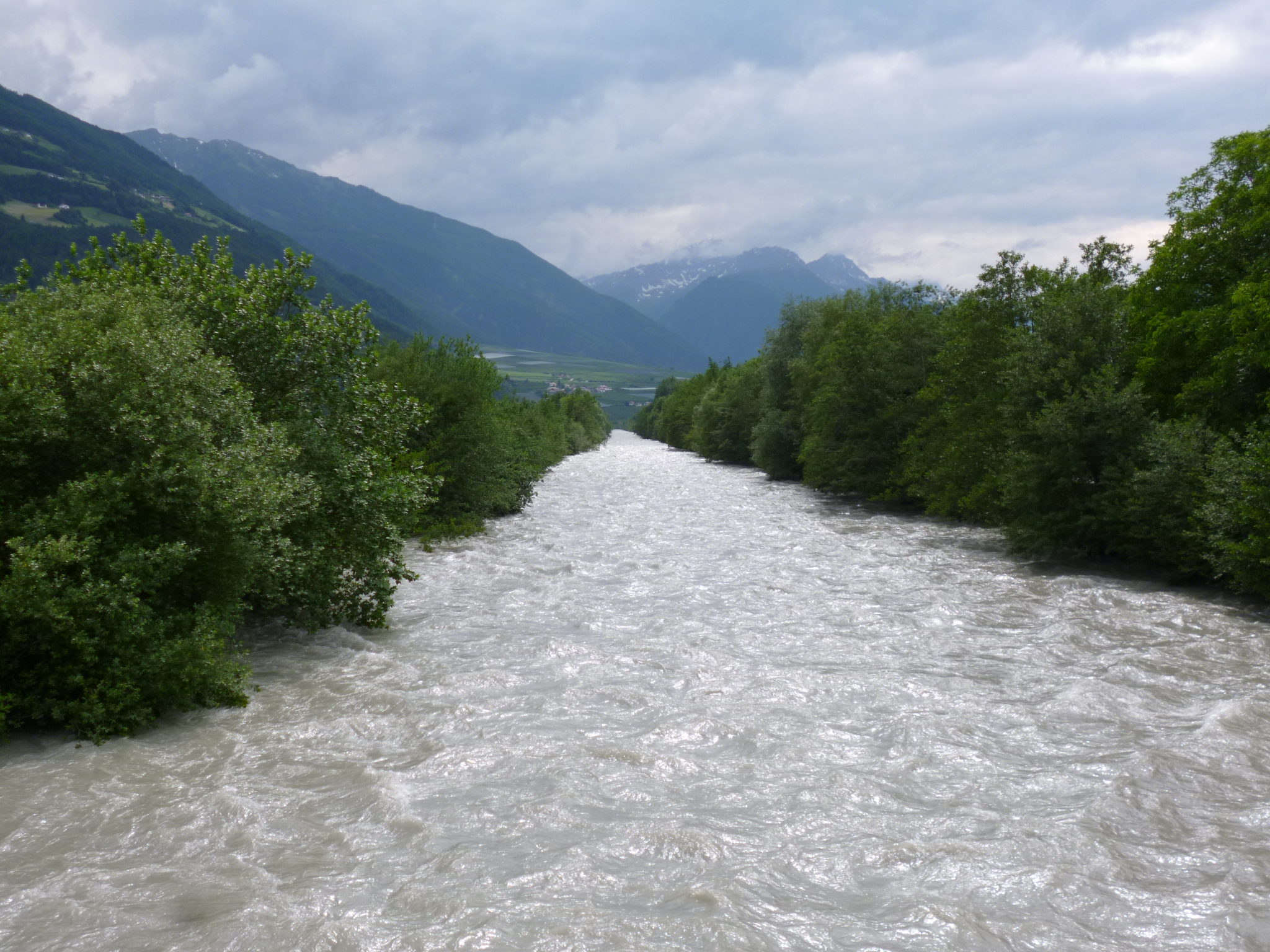
And so in German Italy the mountain torrent surging down from melting snows above is tamed.  Someone,  or some many,  have built a channel so that it is straight.  No meandering white water thundering over boulders, just mile after mile of straight river kept in check with a lining of stones.

Even the spectacular waterfalls like grey mare’s tails swishing on the steep hillsides get cut off.   These Cutty Sarks use concrete, bricks and cobbles.
P1000856
The water flowing freely away from the Stelvio Pass towards the Italian speaking region
Standard

The Stelvio Pass

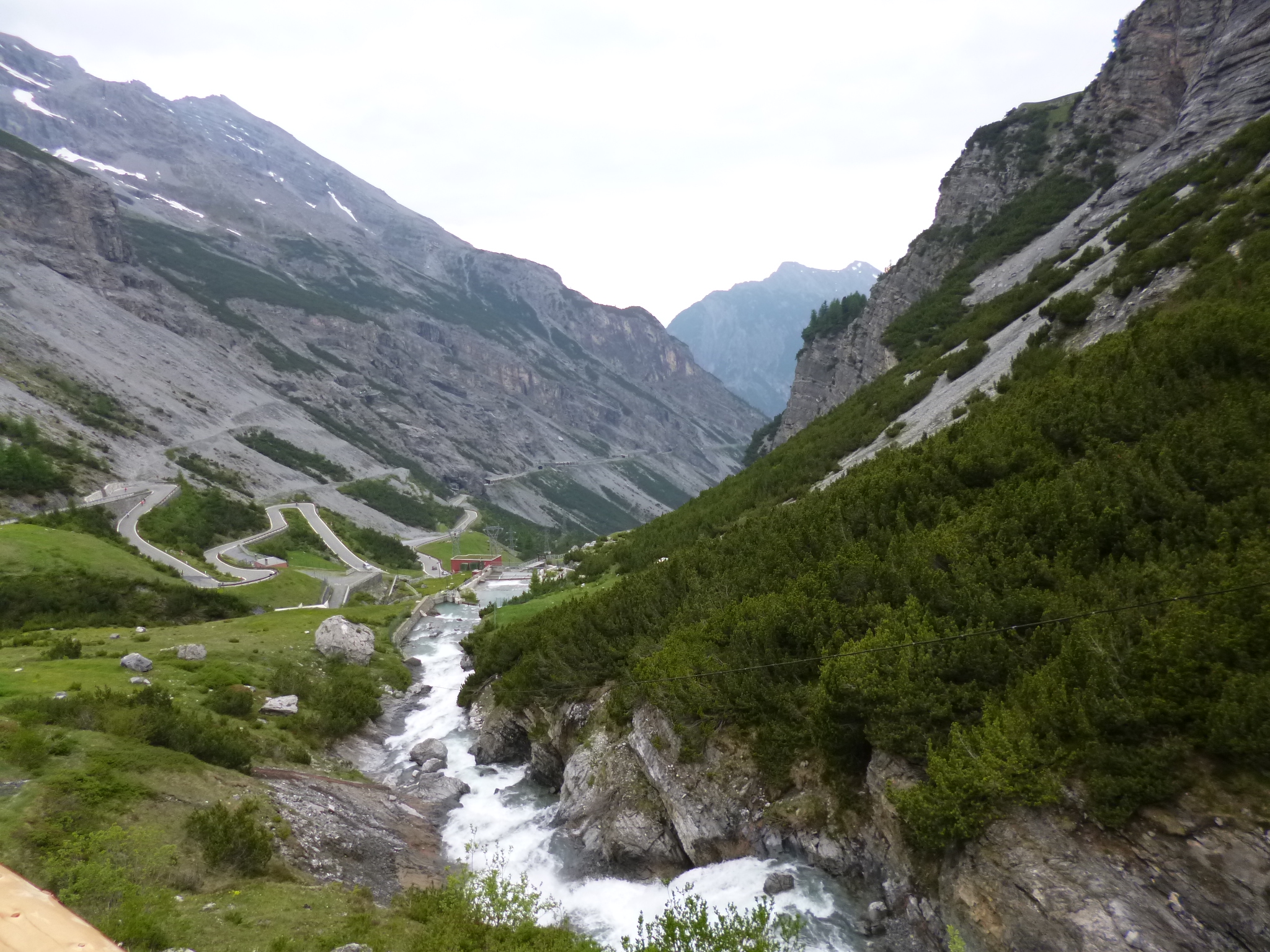
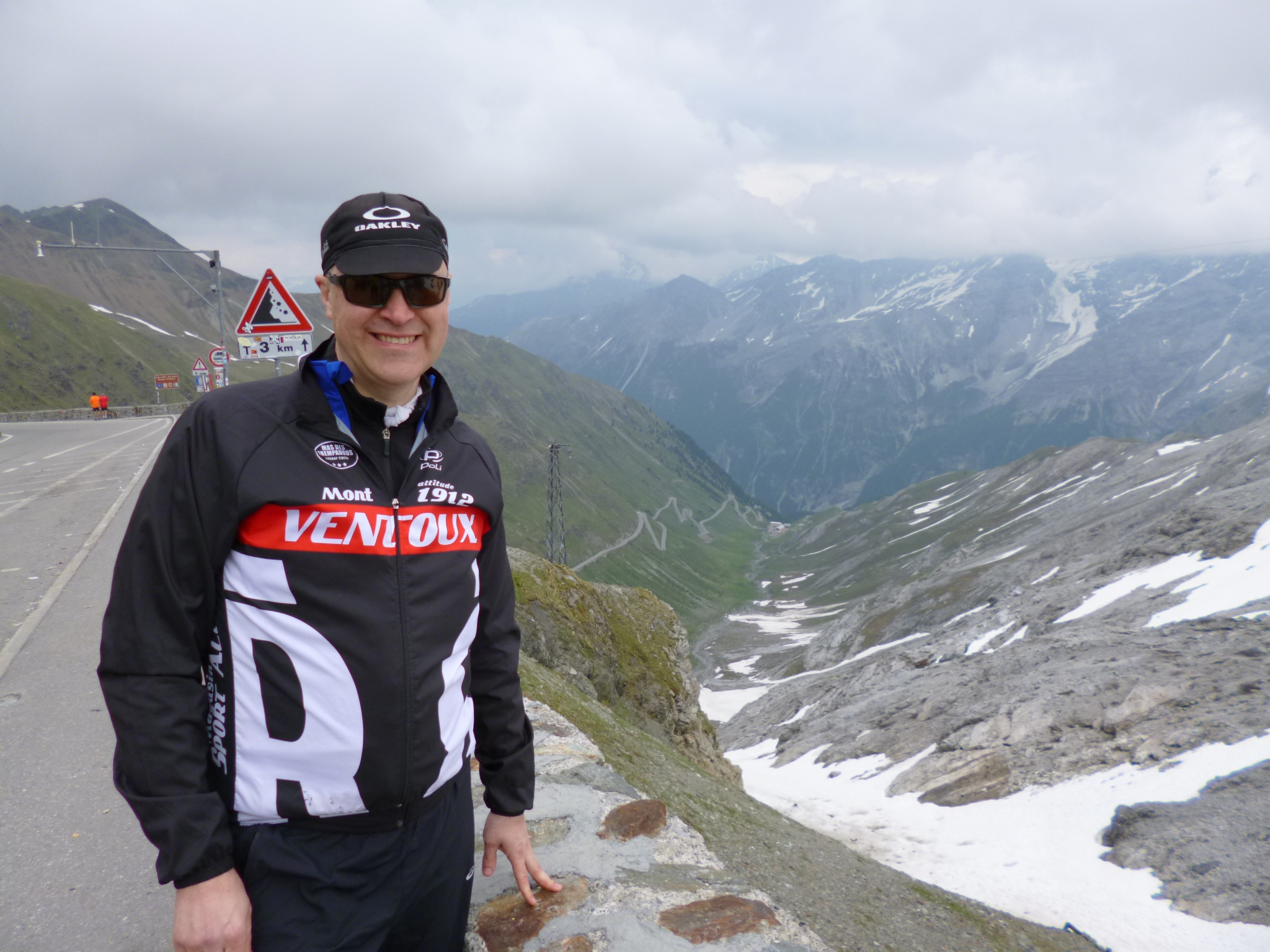
As a London cyclist, a few days in the Dolomites is a rare treat to enjoy spectacular scenery if a little tough on the legs. The highlight of my charity cycle for Langdon was ascending the monstrous Stelvio Pass, the second highest road in the Alps.  The 25km ride, rising 1800m to the top of the pass at 2760m, is a wonderful  nature trail.  The changing landscape and flora are as clear an indication of progress as my Garmin computer, the 48 numbered hairpins or the pain in my legs.
The road starts in a mixed forest with the summer delight of carpets of wild flowers on the verges of the road and the postage stamp sized meadows.  Under the trees we could see the tall Aaron’s Rod, its near two metre tall grey stalks are ready to burst into yellow flowers.  The name is a reminder of the story in the Book of Numbers when Aaron’s staff is left in the Tent of Meeting overnight and sprouts with blossoms.
As the gradient rises we continue up through the cool woods and occasional tunnel that seems to protect the road from rock falls.  The occasional meadow is a wonderful spray of colour.  The mass of yellow cowslips, are interspersed by white cow parsley, blue forget-me-nots and pink scabious.
P1000828
Brian Berry in an alpine meadow.
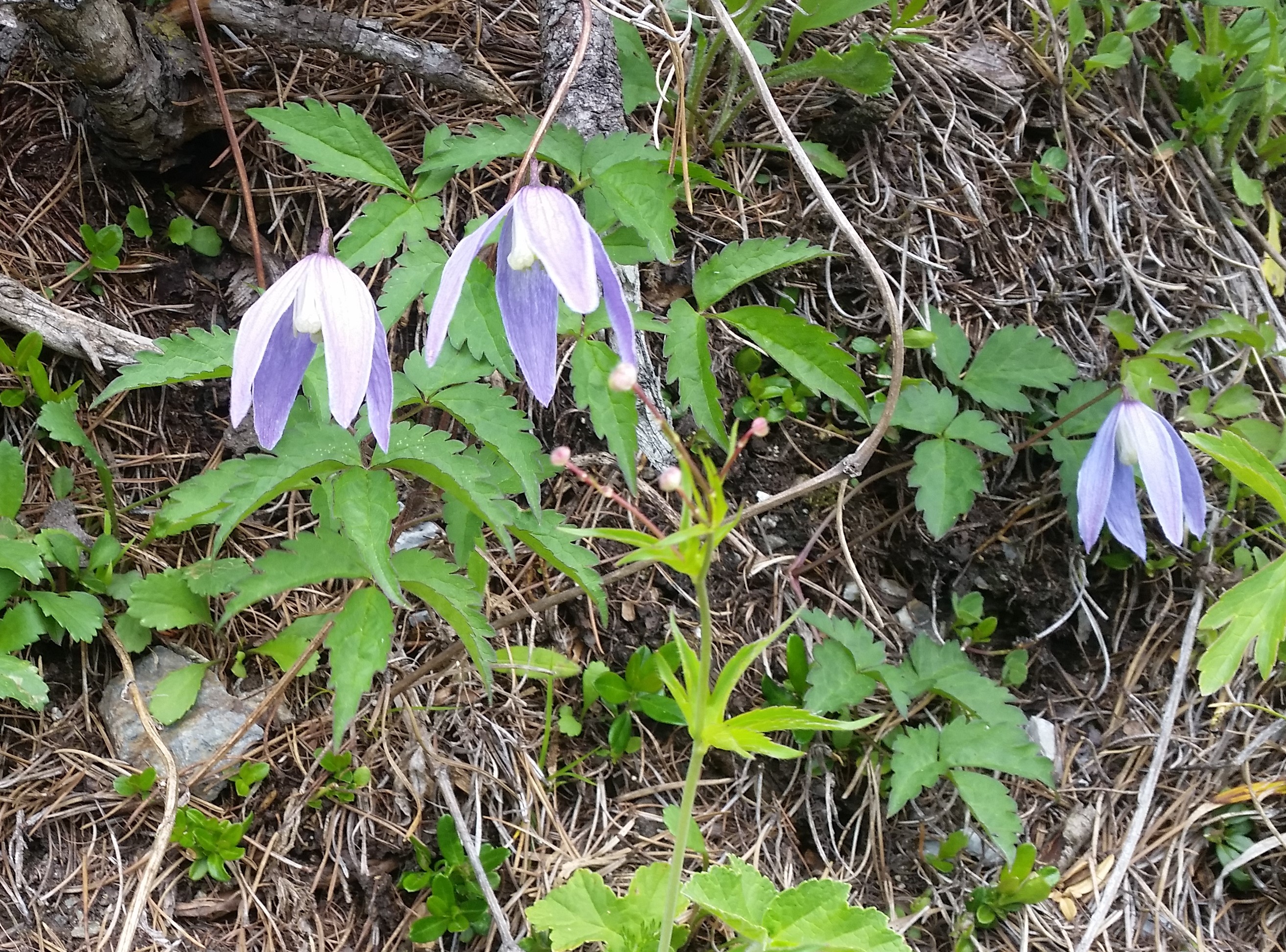
One third up we pass the first and second hairpins and it also seems easy but then no more for several kilometres.  The road meanders up through the forest where the broad leaf trees gradually give way to the pines. On a steep shady slope clinging to the rocks and a few branches is the Alpine Clematis.  It’s four large paper like purple petals hang tired like my legs.  I am struck how similar the leaves looks to the Clematis in my garden.
20150610_131647 (2)
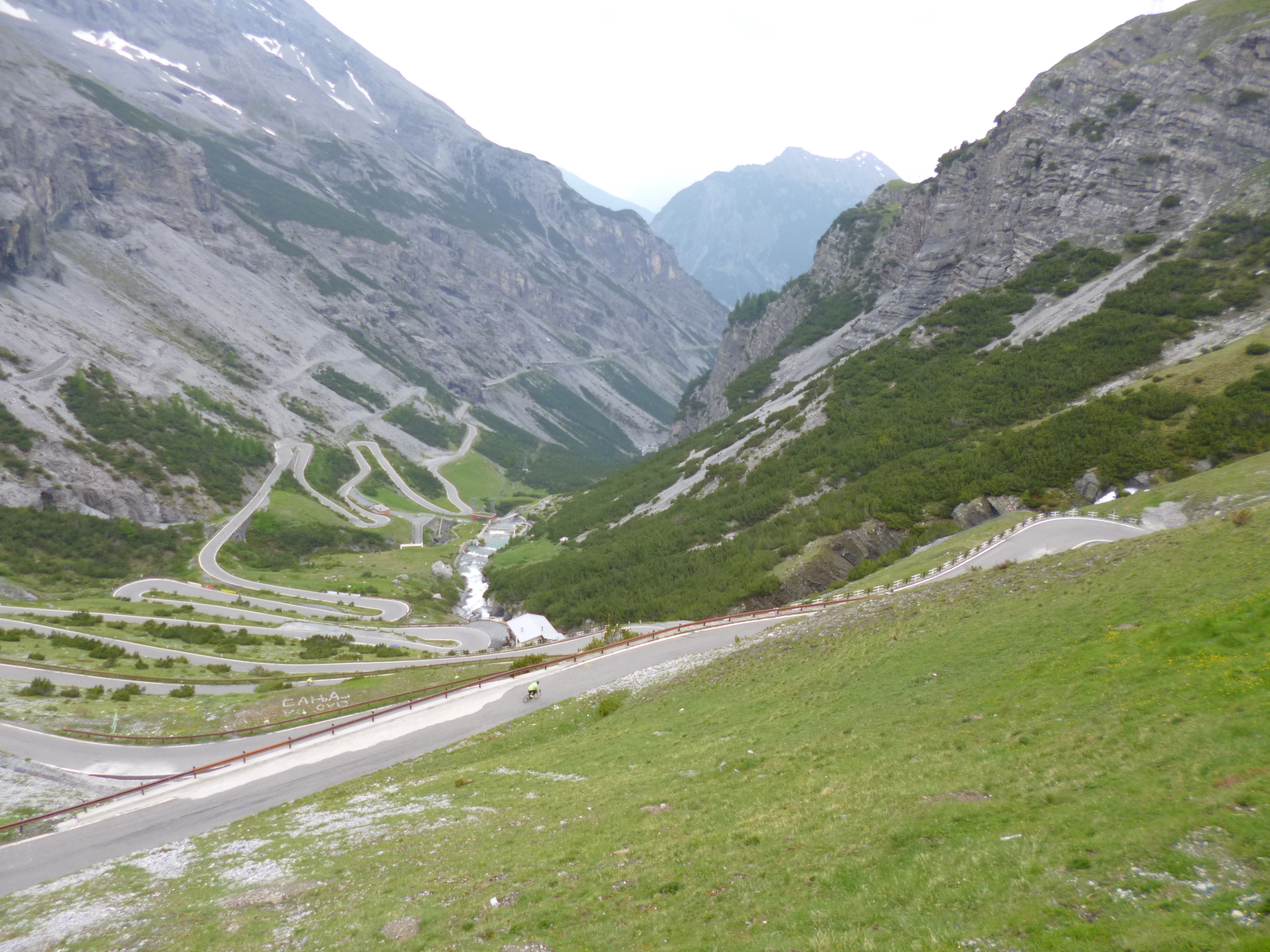
The numbered bends continue.  I find it easier to count the prime numbers as there are only 15 and as each turn up the mountain the trees thin out until by turn 22 we reach the wide open space.  Green hillside gives way in places to rocky scree and high up the snow covered pass looks imposing at the top of a grey green wall.  The road like a folded ribbon snaking up the hillside beckons the tired cyclist. In the Giro they are probably powering up at close to 15 miles an hour, we continue our more modest pace.
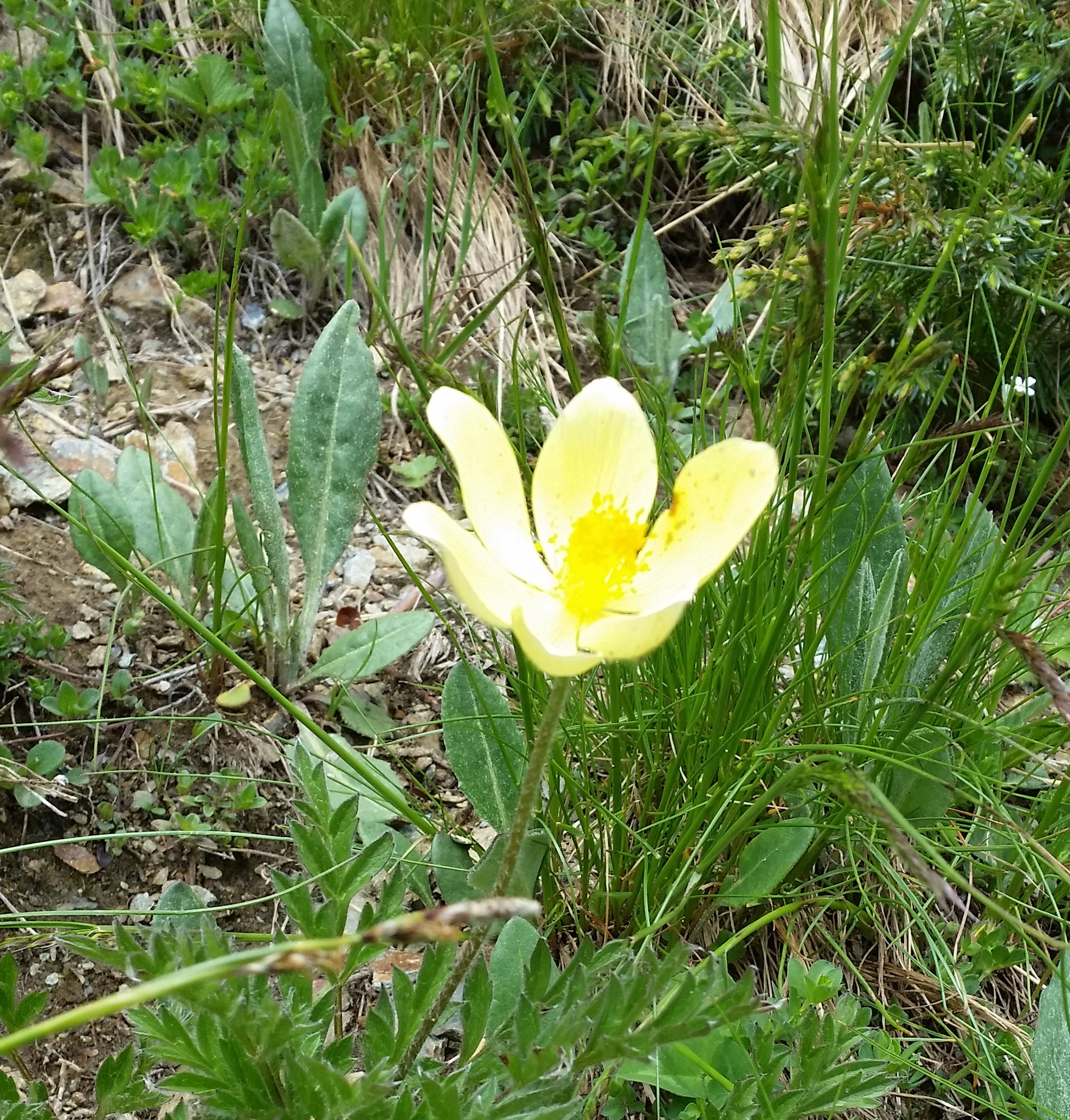
Andy Cherkas, my companion in pain, and I stop on one of the bends.  The steep slope, green from hardy mountain succulents is dotted with yellow pasque flowers with their fern like leaves.
 20150610_135829 (2)
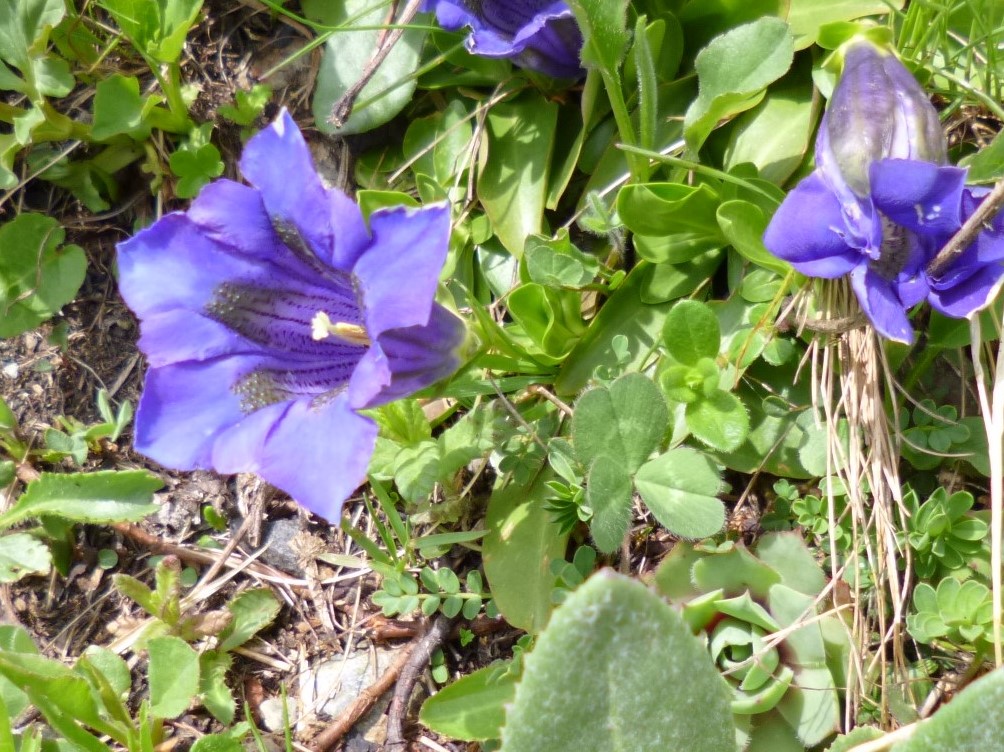
A little further up I leapt off my bike and rushed to take a photograph of some clumps of Trumpet Gentians (Gentiana kochiana).  This is the first time that I have seen these beautiful trumpet flowers that only grow high up in the mountains. The name gentian is after the Illurian King Gentius (about 200 BCE) who recognised the medicinal properties of the yellow gentian.
P1000840 (3)
After a few more hairpins we came to a marker painted on the road, 5km to go.  The gradient was close to 10% for most of the rest of the climb. At last we got to ski station and the top of the pass in the snow.  With several layers of extra clothes I was able to have lunch and a wander amongst the tacky shops.
P1000846
Over the other side, there was a long twisty descent. The road seemed carved out of a deep snowy blanket and I was glad to have added some extra layers.  We sped past a herd of cows with their bells jangling on a high meadow just below the snow line.  I had spotted one marmot on the way up and hoped to see more on the way down but concentrating on bike, the road and hairpin bends pushed aside all other thoughts.  What a great ride.

P1000849

Standard

Wild on a Bike

I obviously don’t cycle fast enough as I spend my time on a bicycle looking about me.  This blog tries to capture the changing seasons as seen from my bike. Enjoy.20150611_110108

Standard